 Timor-Leste: facts and statistics
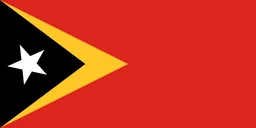
The capital of Timor-Leste is Dili.
Timor-Leste is a country in South-Eastern Asia.
Timor-Leste has a population of 1,436,923 (2026, UN mid-year projection).
That is the 152nd largest of the 195 countries ranked by the UN data.
The area of Timor-Leste is 14,874 km² (as of 2025, mledoze/countries dataset).
Timor-Leste has the 154th largest area of 195 ranked countries (as of 2025, mledoze/countries dataset).
The currency of Timor-Leste is the United States dollar (USD).
The official languages of Timor-Leste are Portuguese and Tetum.
Population of Timor-Leste by year
Facts
- Official name
- Democratic Republic of Timor-Leste
- Capital
- Dili
- Region
- South-Eastern Asia
- Form of government
- Semi-presidential republic
- Currency
- United States dollar (USD)
- Official languages
- Portuguese and Tetum
- Calling code
- +670
- Internet domain
- .tl
- Time zones
- Asia/Dili
- Highest point
- Tatamailau, 2,963 mWikidata
Land neighbours
Key statistics
Each indicator links to its own page with the full history and the world ranking.
People
| Indicator | Value | Year | Rank | Source |
|---|---|---|---|---|
| Population | 1,436,923 | 2026 | 152 of 195 | UN mid-year projection |
| Population density | 94.2 people per km² | 2024 | 94 of 193 | World Bank |
| Population growth | 1.27% | 2025 | 78 of 194 | World Bank |
| Urban population | 28.8% | 2025 | 176 of 194 | World Bank |
| Life expectancy | 67.9 years | 2024 | 145 of 194 | World Bank |
| Fertility rate | 2.63 births per woman | 2024 | 67 of 194 | World Bank |
| Median age | 21.0 years | 2023 | 146 of 195 | UN |
| Adult literacy | 69.4% | 2022 | 95 of 119 | World Bank |
| Internet users | 35.0% | 2021 | 158 of 184 | World Bank |
Economy
| Indicator | Value | Year | Rank | Source |
|---|---|---|---|---|
| GDP | $1.90 billion | 2025 | 174 of 190 | World Bank |
| GDP per capita | $1,341 | 2025 | 165 of 190 | World Bank |
| GDP per capita, PPP | 4,809 international dollars | 2025 | 156 of 186 | World Bank |
| GDP growth | 7.0% | 2025 | 19 of 189 | World Bank |
| Inflation | 0.4% | 2025 | 156 of 177 | World Bank |
| Unemployment | 1.6% | 2025 | 165 of 178 | World Bank |
| Human Development Index | 0.634 | 2023 | 140 of 191 | UNDP |
| Income inequality (Gini) | 28.7 | 2014 | 133 of 154 | World Bank |
Land
| Indicator | Value | Year | Rank | Source |
|---|---|---|---|---|
| Area | 14,874 km² | as of 2025 | 154 of 195 | mledoze/countries dataset |
| Forest area | 71.0% | 2024 | 16 of 193 | World Bank |
| Arable land | 7.5% | 2024 | 112 of 190 | World Bank |
| Coastline | 706 km | as of 2025 | 83 of 150 | CIA World Factbook |
| CO2 emissions per person | 0.47 tonnes | 2024 | 163 of 192 | Global Carbon Project |
Timor-Leste through history
Map quizzes that include Timor-Leste
Frequently asked questions
What is the capital of Timor-Leste?
The capital of Timor-Leste is Dili.
What is the population of Timor-Leste?
Timor-Leste has a population of 1,436,923 (2026, UN mid-year projection).
What is the area of Timor-Leste?
The area of Timor-Leste is 14,874 km² (as of 2025, mledoze/countries dataset).
What currency does Timor-Leste use?
The currency of Timor-Leste is the United States dollar (USD).
What language is spoken in Timor-Leste?
The official languages of Timor-Leste are Portuguese and Tetum.
Sources and method
- UN - World Population Prospects 2024, Licence: CC BY 3.0 IGO
- World Bank - World Development Indicators, Licence: CC BY 4.0
- UNDP - Human Development Report, Licence: CC BY 3.0 IGO
- mledoze/countries (country profiles, area), Licence: ODbL 1.0
- CIA World Factbook (final snapshot), Licence: Public domain
- Global Carbon Project - Global Carbon Budget, Licence: CC BY 4.0
- Wikidata (highest points, city populations, driving side, names), Licence: CC0
- IANA Time Zone Database, Licence: Public domain
UN figures are from UN - World Population Prospects 2024, Medium variant, World Population Prospects 2024 (revision 1): Interim update, released 19 January 2026 (Togo replaced; all other locations as released 11 July 2024); downloaded 2026-11-24. They count people on 1 July of each year. Values up to 2023 are estimates; later values are projections.
World Bank figures are the latest annual value in the data (World Development Indicators). Where the two sources give a population for the same year and differ by more than 2%, the page says so.
The population rank is computed from the UN values for 2026 among the 195 independent states that have a value; territories and dependencies are not ranked.
A year given as "as of" is when the figure was read from the source, not the year it describes.
Last updated:
More about Timor-Leste
- World ranking: Population
- World ranking: Population density
- World ranking: Population growth
- World ranking: Urban population
- World ranking: Life expectancy
- World ranking: Fertility rate
- World ranking: Median age
- World ranking: Adult literacy
- World ranking: Internet users
- World ranking: GDP
- World ranking: GDP per capita
- World ranking: GDP per capita, PPP
- World ranking: GDP growth
- World ranking: Inflation
- World ranking: Unemployment
- World ranking: Human Development Index
- World ranking: Income inequality (Gini)
- World ranking: Area
- World ranking: Forest area
- World ranking: Arable land
- World ranking: Coastline
- World ranking: CO2 emissions per person
Every year has a map
Drag a timeline across 2,500 years in the free Geographic History app - every province, ruler and battle, also offline.